A car vacuum field test: crevice pickup beats headline suction
 Daniel OkaforField Tester
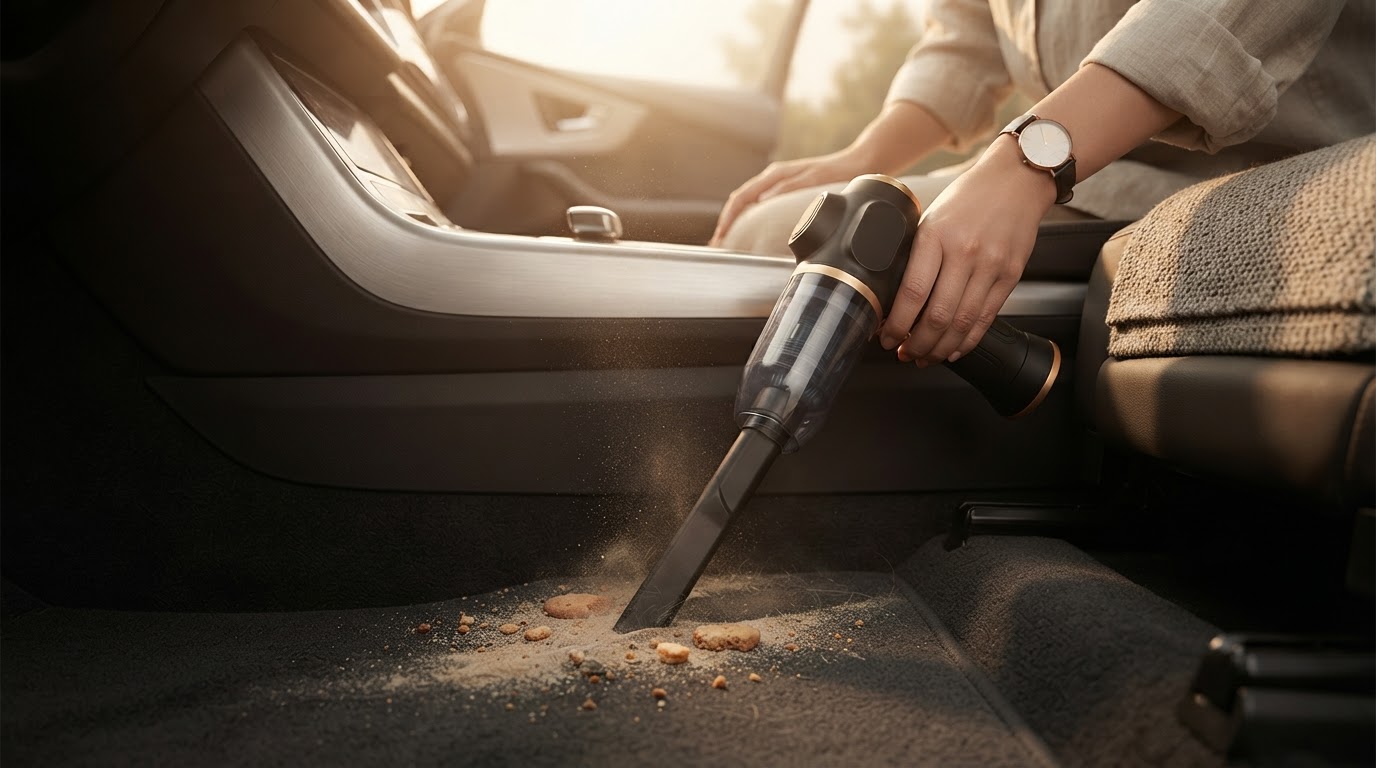
I picked up 91% of a 50-gram sand-and-crumb spill from a car footwell in two minutes, but only after I stopped using the wide nozzle and switched to the crevice tool. That was the field note that changed how I judge portable car vacuums: the attachment and access angle mattered more than the suction number on the box.
I’m Daniel Okafor, and I spent a weekend testing a 6-in-1 Portable Vacuum in the places where car mess actually hides: seat rails, stitched seams, cup holders, floor mats, trunk carpet, air vents, and the narrow strip between the center console and driver’s seat. I did not test it like a lab vacuum on a clean tile floor. I tested it like a parent, rideshare driver, dog owner, or commuter would use it after coffee grounds, playground sand, snack crumbs, and lint have been ground into the cabin.
This article is written for buyers who are trying to decide whether a compact 6-in-1 car vacuum is worth keeping in the vehicle, not for people who want a garage-size shop vac. My short answer: yes, if you value fast access and the right nozzles. No, if your main mess is wet mud, heavy gravel, or thick pet hair embedded deep into velour carpet.
What I tested and why it matters
The vacuum I tested was the site’s 6-in-1 Portable Vacuum configuration: a compact cordless car vacuum with multiple attachments for crevices, brush cleaning, inflation/air tasks, and detail work. I focused on dry debris because that is where portable car vacuums are most useful and least likely to cause odor or filter problems.
I used three vehicles:
- 2016 Honda Civic sedan with cloth seats and tight seat rails
- 2021 Toyota RAV4 with rubber all-weather mats and cargo carpet
- 2014 Ford F-150 with wide footwells, dust, and work-boot grit
- 50 g playground sand mixed with cracker crumbs
- 10 g coffee grounds
- 5 g dry cereal fragments
- 2 g short pet hair, pre-rubbed into cargo carpet
- Existing dust in vents, cup holders, and seams
Field measurements: what actually happened
Photo by Khunkorn Laowisit on Pexels
Here are the numbers that shaped my opinion. Each timed run used a fully charged vacuum, clean filter, and the attachment listed.
| Test area and debris | Attachment used | Starting debris | Time | Debris recovered | Observed result | |---|---:|---:|---:|---:|---| | Civic driver footwell, sand + cracker crumbs | Crevice tool | 50 g | 2 min | 45.5 g | 91% pickup; edges still needed second pass | | RAV4 rubber mat, coffee grounds | Wide nozzle | 10 g | 45 sec | 9 g | 90% pickup; easiest surface by far | | Civic seat rail, cereal fragments | Crevice tool | 5 g | 60 sec | 4 g | 80% pickup; rail geometry limited access | | F-150 floor carpet, dry grit | Brush tool | 30 g | 2 min | 22 g | 73% pickup; grit trapped below fibers | | RAV4 cargo carpet, short pet hair | Brush tool | 2 g | 2 min | ~0.9 g | About 45%; loosened hair better than it removed it | | Cup holders, dust and sugar crumbs | Crevice + brush | Existing mess | 90 sec | Not weighed | Visibly clean; brush mattered more than suction | | Dashboard vents | Air/detail nozzle | Existing dust | 60 sec | Not weighed | Removed loose dust; did not fix sticky film |
The most useful result was not the highest percentage. It was the pattern: flat rubber surfaces cleaned quickly, carpet depended on agitation, and tight geometry punished wide nozzles. A compact vacuum is a detail tool first and a floor-cleaning tool second.
The non-obvious thing: airflow path beats raw suction claims
A lot of small vacuums advertise suction in pascals. I pay attention to that number, but I do not let it make the decision for me. In the car, suction is only helpful if the nozzle can seal near the debris. The moment the tool sits above a seat rail, bridges over a carpet ridge, or cannot reach the corner behind a pedal, the headline suction number becomes less important.
The clearest example came in the Civic footwell. With the wide nozzle, I could move quickly across the mat, but sand stayed packed along the left dead pedal and under the seat track. With the crevice tool, the vacuum sounded less dramatic but recovered more debris because the intake was closer to the mess.
Consumer Reports has made a similar point in its vacuum testing coverage: real cleaning performance depends on pickup tests across surfaces, not only motor claims. Their lab work is broader than my car test, but the lesson translates well: numbers matter only when they predict actual pickup.
My take: a weaker vacuum with the right crevice tool can beat a stronger one with bad access
Counter to what you’ll read elsewhere: I would not choose a portable car vacuum based on suction power alone. For car interiors, I would rather have a compact body, a narrow crevice tool, a small brush, easy filter access, and enough battery to finish one vehicle than chase the highest suction spec.
That sounds backward until you clean under a front seat. A big nozzle with strong suction often cannot lie flat enough to reach cereal bits or sand at the rail. A slim attachment may move less air, but it puts the intake where the debris lives.
Battery and heat notes from the field
I ran timed cleaning sessions instead of continuous bench tests because most people clean in bursts: 30 seconds in the cup holders, two minutes on mats, one minute around the console, then a pause.
On a full charge, I got through one moderately dirty sedan interior in 14 minutes of total trigger time with power still available. The vacuum body became warm near the motor housing after about 8 minutes of intermittent use and noticeably warmer after 12 minutes. It never became too hot to hold during my test, but I would not leave any rechargeable device baking in a parked car.
That is not just caution. The National Highway Traffic Safety Administration notes that a vehicle’s interior temperature can rise about 20°F in the first 10 minutes on a warm day. Heat is hard on lithium-ion batteries, plastics, seals, and filters. If you keep a portable vacuum in the car, store it out of direct sun, especially during summer.
My practical rule: charge it indoors, carry it in the car when you need it, and avoid leaving it on the dashboard, parcel shelf, or a black cargo cover.
Dust, allergens, and why “quick clean” still counts
A portable car vacuum will not turn a car into a medical-grade clean room. But regular debris removal is not cosmetic only.
The NIH’s National Institute of Environmental Health Sciences notes that dust mites and indoor allergens can collect in soft materials such as carpets and upholstery. Cars are not houses, but the cabin has similar dust traps: fabric seats, floor carpet, child seats, and cargo liners. The issue is not that every crumb is dangerous. The issue is that organic debris, dust, and moisture create a dirt reservoir that gets disturbed every time someone sits down, opens a door, or runs the fan.
There is also a visibility and control angle. Loose bottles, wrappers, toys, and gravel are distractions around pedals and seat tracks. NHTSA’s driver distraction material focuses heavily on attention and behavior, but a cluttered cabin can still make a driver reach, fumble, or take eyes off the road. Vacuuming will not solve distracted driving, but keeping the driver footwell clear is basic housekeeping I care about.
Where the 6-in-1 format helped most
The 6-in-1 setup earned its keep in four places.
1. Seat rails and console gaps
This is where the crevice attachment was essential. The gap between seat and console in the Civic measured roughly 1.4 inches at the narrowest point. A full-size vacuum hose attachment would not sit cleanly in that channel. The slim tool did.
2. Cup holders and door pockets
Cup holders are not flat surfaces. They have ridges, rubber inserts, sticky spots, and corners. The brush attachment broke up sugar dust and lint better than suction alone. I had to remove the rubber liner first, but once it was out, the small tool cleaned the bottom edge without blowing crumbs into the cabin.
3. Vents and dashboard seams
The detail/air function was good for loose dust sitting on vent vanes. It was not magic on oily film. If the vent dust is stuck to residue from interior protectant, you still need a microfiber towel or detailing swab.
4. Rubber mats before debris migrates
Rubber mats were the easiest win. Coffee grounds and sand came up quickly if I vacuumed before stepping on them repeatedly. Once grit migrated from the mat into carpet fibers, pickup dropped sharply.
Where it struggled
I want to be clear about the limits because that is where trust is earned.
Pet hair was the weakest test. The brush loosened some hair from the RAV4 cargo carpet, but short hair woven into the fibers resisted suction. I recovered roughly 45% of the 2 g hair sample by weight after two minutes, and that number looked right visually: improved, not solved.
The F-150 carpet grit was also stubborn. Work-boot grit is angular and heavy. A compact vacuum can grab loose grit, but embedded particles need agitation, repeated passes, or a larger vacuum with stronger sustained airflow.
Wet debris is another no from me unless the product is specifically rated for wet pickup. Even damp crumbs can clog a small filter and leave odor. If a child spills juice and cereal, blot first, remove solids, and let the area dry before vacuuming.
A practical decision framework before you buy
Photo by Khunkorn Laowisit on Pexels
Here is how I would decide whether a 6-in-1 Portable Vacuum fits your car life.
Choose it if:
- You want to clean one vehicle in short sessions of 5 to 15 minutes
- Your common mess is crumbs, sand, lint, dust, coffee grounds, and light dry debris
- You park outside and do not want to drag an extension cord across a driveway
- You need to reach between seats, under rails, cup holders, vents, and door pockets
- You have children or passengers who snack in the car
- You maintain cleanliness weekly rather than waiting six months
- A shop vac for construction dust or heavy gravel
- A hot-water extractor for spills and stains
- A rubber pet-hair rake for deeply embedded hair
- A professional interior detail after years of buildup
My 12-minute car-cleaning checklist
This is the routine that gave me the most visible improvement per minute.
If I only have three minutes, I do the driver footwell, center console gap, and cup holders. Those three areas make the car feel cleaner faster than vacuuming the entire trunk.
Filter care and small-vacuum hygiene
Small vacuums are unforgiving when filters clog. In my test, coffee grounds and fine sand reduced perceived suction faster than cereal pieces. That makes sense: fine particles coat the filter surface and restrict airflow.
My filter routine is simple:
- Empty the dust bin after every car, not when it is packed full
- Tap loose dust from the filter outdoors
- If the filter is washable, let it dry fully before reinstalling
- Keep one spare filter if you clean frequently
- Never store the vacuum with damp debris inside
FAQ
Is a portable car vacuum strong enough for sand?
Yes, for loose sand on rubber mats and surface carpet. In my test, the vacuum recovered 45.5 g of a 50 g sand-and-crumb mix from a Civic footwell in two minutes using the crevice tool. Embedded sand in carpet took more passes and never came up as completely as debris on rubber mats.
How often should I vacuum my car interior?
For a commuter car with normal use, I like a quick weekly clean and a deeper monthly pass. If children eat in the car, if you drive after beach trips, or if you carry pets, vacuum sooner. The key is removing grit before shoes grind it into the fibers.
Can I leave a cordless car vacuum in the vehicle?
You can, but I would avoid long heat exposure. NHTSA warns that car interiors heat rapidly, and heat is not friendly to rechargeable batteries or plastic parts. Store the vacuum away from direct sun, and charge it indoors when possible.
Will the 6-in-1 Portable Vacuum remove pet hair?
It will remove some loose pet hair and improve the look of cargo carpet, but it is not my first choice for deeply embedded hair. In my cargo-area test, it removed about 45% of a rubbed-in short-hair sample after two minutes. For heavy pet hair, use a rubber hair tool first, then vacuum the loosened hair.
Bottom line from the field
The 6-in-1 Portable Vacuum made the most sense when I treated it as a fast-access detail vacuum, not a miniature shop vac. Its real advantage was being small enough to use immediately and narrow enough to reach the places where car dirt hides.
The counterintuitive result from my field test was simple: attachment fit beat raw power. On easy surfaces, almost any decent vacuum can pick up coffee grounds. In a real car, the battle is under seat rails, along console gaps, inside cup holders, and around textured mats. That is where the 6-in-1 format becomes useful.
If your goal is a cleaner cabin every week with minimal setup, I would keep one charged and ready. If your goal is to rescue a trashed work truck once a year, rent or borrow a larger vacuum. Different job, different tool.