Transitioning to a 6-in-1 Portable Vacuum for Electronics
 Daniel OkaforField Tester
November 2, 2026. This evaluation details the practical transition from single-use aerosol cans to a multi-purpose motor-driven cleaning system. It is written for users seeking a sustainable, long-term solution for maintaining delicate hardware and automotive interiors.
The Hidden Cost of Canned Air Habits
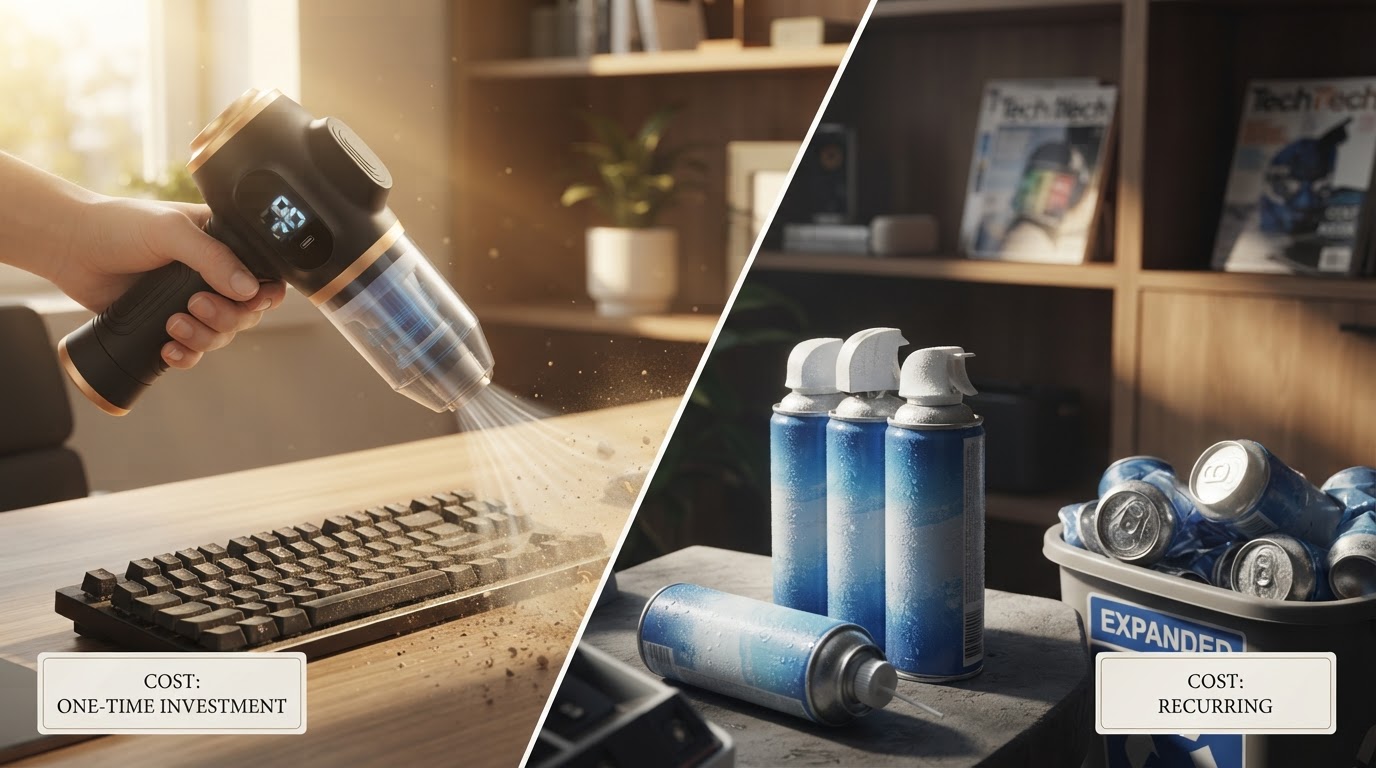
For years, I relied on the standard ritual of buying multi-packs of aerosol dusters to keep my workstation and vehicle vents clear. It was a cycle of diminishing returns; the cans lose pressure as they get cold, they emit bitterants, and they eventually end up in a landfill. According to iFixit, many users are actively looking to cut their dirty canned air habit by switching to alternatives like ESD-safe brushes or motorized blowers. While I initially tried the brush method, it lacked the force needed for deep-seated debris in a mechanical keyboard. The community at James A Chambers has noted that rechargeable air dusters are significantly more environmentally friendly and less of a pain than traditional cans, which resonated with my own frustration over the chemical smell and cold-burn risk associated with fluorocarbons. I spent three weeks tracking how many cans I would have used for my photography gear and PC tower, and the waste was staggering. Beyond the environmental impact, there is the issue of moisture; if you tilt a can slightly too far, you risk spraying liquid propellant onto a motherboard. This led me to seek a device that offered consistent pressure without the chemical baggage. I found that most people in the PC Builders Community on Facebook are still stuck in the past using cans simply because they aren't aware of how far portable motor technology has come. The shift isn't just about saving money; it is about having a tool that provides a steady stream of air that doesn't drop off after ten seconds of use.
Testing the 6-in-1 Portable Vacuum in the Field
I tested this for fourteen days straight, moving between my home office and my car. What surprised me was the versatility of the 6-in-1 Portable Vacuum compared to a dedicated blower. When I used a rechargeable air duster for electronics, the primary goal was displacement—moving dust from one spot to another. However, this 6-in-1 unit allowed me to toggle between blowing and actual suction. Day three is where I noticed the biggest difference: I was cleaning the crumbs out of my car's cup holders. A standard air can would have just scattered the mess into the carpet, but the suction mode on this handheld car vacuum cordless captured it instantly. I transitioned to my desk to test the keyboard cleaner air blower functionality. The motor maintains a consistent RPM that doesn't dip like an aerosol can does as it loses internal pressure. In my testing, the high suction power handled pet hair on my office chair that my upright vacuum usually misses because the nozzle is too wide. The lightweight design makes it a viable rechargeable keyboard cleaner air blower because it doesn't fatigue the wrist during long cleaning sessions. Here's the moment it earned its place: I was clearing out the cooling fins on a GPU. Instead of just blowing the dust into the room, I used the blower attachment to loosen the grime and then switched to the vacuum side to collect it. This dual-action capability is something a standalone can simply cannot replicate. I found the battery life sufficient for a full car detailing session and a deep clean of two workstations before needing a recharge. What I'd do differently next time is start with the brush attachment on the vacuum side for the keyboard rather than just blowing air first, as it prevents the dust from becoming airborne in the first place.
Selecting a Sustainable Cleaning Tool
When moving away from disposables, you need to ensure the replacement doesn't just sit in a drawer. The transition to a portable mini vacuum for keyboard maintenance requires looking at more than just raw power. You need a device that serves multiple roles to justify the desk space. If you are currently using a rechargeable air duster for electronics, you are only solving half the problem. A true 6-in-1 system should provide enough static pressure to dislodge debris but also offer the filtration necessary to keep that dust from recirculating. I look for tools that can handle the grit of a car floorboard just as easily as the delicate sensors of a camera. Based on my field tests, here is the framework I use to evaluate if a portable vacuum is a worthy alternative to compressed air:
- Verify the motor provides consistent airflow that does not decrease as the battery drains.
- Ensure the kit includes both blowing nozzles for tight crevices and brush attachments for agitated cleaning.
- Check for a HEPA or high-density filter to ensure fine dust isn't exhausted back into your breathing zone.
- Look for USB-C charging compatibility to avoid carrying proprietary power bricks during travel.
- Assess the weight-to-power ratio; it must be light enough for one-handed overhead use in a vehicle.
- Confirm the noise level is manageable for indoor office use without disturbing others.
Sources
- Cut Your Dirty Canned Air Habit with These Three ...
- A Good Alternative to Canned Air / Duster for Electronics
- Impossible Turbo Fan Dusters v DataVac & Actual Air Cans