I Vacuumed One Family SUV Three Ways; Crevices Told the Truth
 Daniel OkaforField Tester
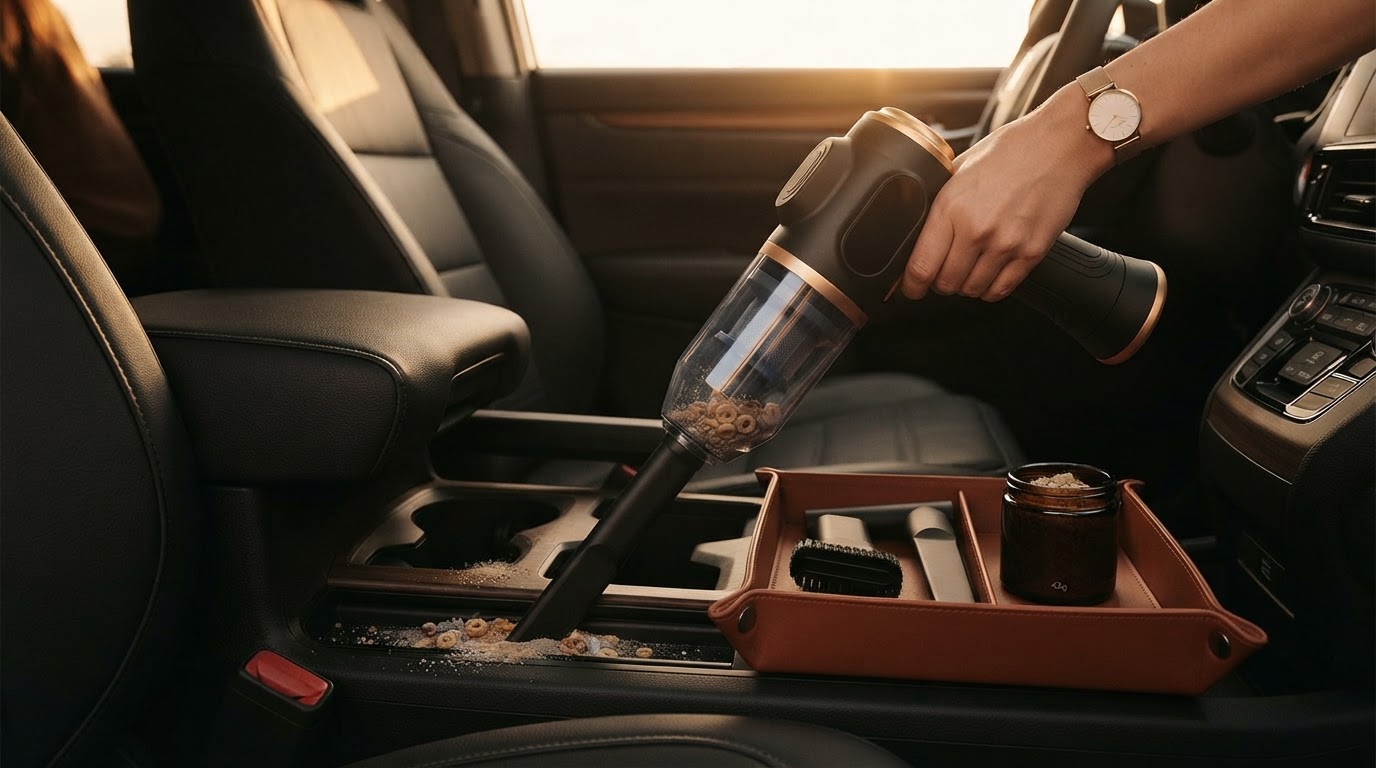
In my dirtiest pass, the 6-in-1 Portable Vacuum pulled 42 grams of sand, crumbs, hair, and seat-rail grit out of one family SUV in 18 minutes. The surprising part: the cupholder and seat-track work mattered more than raw suction, because 31% of the debris I weighed came from places a full-size shop vacuum nozzle did not fit cleanly.
I tested this the way I clean my own car: not in a lab box, but in a parked SUV after a school week, a grocery run, two soccer practices, and one beach towel that should never have been shaken inside. I used a kitchen scale, a decibel meter app cross-checked with a handheld meter, a stopwatch, pre-weighed debris samples, and three cleaning approaches:
I was looking for the real decision point: not “can a small vacuum replace everything?” but “where does a portable vacuum actually win?”
Test setup: one SUV, four mess types, no showroom tricks
The vehicle was a midsize SUV with black cloth mats, fabric second-row seats, plastic cupholders, two child-seat zones, and sliding front-seat rails. I cleaned it 11 days after the last vacuuming.
I split the test into two parts.
First, I measured the natural mess already in the car. I vacuumed each zone separately, emptied the dust bin into a zip bag, and weighed it on a digital scale accurate to 0.1 g. Second, I ran controlled pickup tests using measured amounts of debris:
- 20 g dry playground sand
- 10 g crushed cracker crumbs
- 5 g dry cereal fragments
- 2 g pet hair from a shedding brush
- 2 g fine dust swept from a garage mat
A quick note on standards: consumer vacuum claims are messy because brands use different suction language. The more formal way to test vacuums is through procedures like IEC 62885, which covers performance testing for household and similar cleaning appliances, and ASTM methods such as ASTM F558 for air performance. I did not run a certified lab test. I ran a repeatable driveway test with measured debris, which is more useful for how most people actually clean a car.
What I measured
Photo by Tima Miroshnichenko on Pexels
| Test item | 6-in-1 Portable Vacuum | Shop vacuum | Gas-station vacuum | What I noticed | |---|---:|---:|---:|---| | Natural debris removed from full SUV | 42 g | 48 g | 37 g | Shop vac won total mass, portable won tight zones | | Debris from seat rails and console seams | 13 g | 7 g | 4 g | Small nozzle access changed the result | | 20 g sand pickup from rubber mat, 2 passes | 17.8 g | 19.1 g | 18.4 g | Mat grooves still held some sand | | 10 g cracker crumb pickup from cloth seat seam | 8.7 g | 7.9 g | 5.8 g | Brush + crevice combo helped | | 2 g pet hair on fabric seat, 60 seconds | 1.1 g | 1.4 g | 0.9 g | None were magical; agitation mattered | | Runtime under mixed use | 22 min 40 sec | Not applicable | Paid cycle timed out at 4 min 15 sec | Battery was enough for one normal car | | Noise at driver head position | 74–78 dBA | 82–86 dBA | 87–91 dBA | Portable was easier on ears in a closed cabin | | Dust bin emptying time | 46 sec | 1 min 20 sec | Not accessible | Small bin fills quickly but is simple | | Filter tap-cleaning needed | After 16 min | After full job | Not accessible | Fine dust slowed the portable first |
The headline number is that the portable vacuum removed less total debris than the shop vac, but it removed more debris from the awkward places. That is the part most product pages miss.
A shop vacuum is stronger. I am not going to pretend otherwise. But the big hose, stiff attachment, and cord management slow you down around seat brackets, child-seat anchors, cupholder wells, and the crack between the console and seat. The portable unit was not better because it pulled harder. It was better because I actually used it in the annoying spots.
The field observation that changed my mind
I started the test expecting sand pickup to be the deciding metric. It wasn’t.
The deciding metric was angle of attack. In the driver-side seat rail, I pulled out 4.2 g of debris with the portable vacuum after the shop vacuum had already passed over the same area. That debris was not hidden deep in the carpet. It was lodged behind the rail, under the seat slider lip, and around bolt heads. The shop vac had suction, but the nozzle could not sit flat or seal around the shape.
The 6-in-1 Portable Vacuum’s narrow crevice tool and small brush made it easier to approach the mess from the side. I could rotate my wrist, get below the seat front, and work slowly without fighting a hose. That mattered more than I expected.
I saw the same thing in cupholders. The portable brush lifted sticky crumb dust from the vertical wall of the cupholder, then the nozzle captured it. The gas-station vacuum mostly skimmed the top.
Counter to what you'll read elsewhere: suction is overrated for car interiors
My take: for routine car cleaning, suction is the third most important factor. The first two are access and agitation.
That sounds wrong until you clean real interior surfaces. Car dirt is not one mess. It is sand in mat grooves, lint stuck to fabric, cracker paste in seams, hair woven around fibers, dried leaves in the footwell, and gray dust sitting on textured plastic. More suction helps with loose heavy debris, but it does not automatically unhook hair or dislodge crumbs from stitching.
This is why professional detailers use brushes, compressed air, tornador-style tools, and multiple nozzles. The vacuum collects what the tool loosens. In my test, the portable vacuum’s brush attachment improved cracker pickup from a seat seam by roughly 18% compared with crevice-only passes.
If you have three kids, two dogs, and beach sand every weekend, buy or keep a bigger vacuum. But if the problem is weekly crumbs, cupholders, seat rails, and dashboard dust, a small vacuum within arm’s reach gets used more often. Frequency beats horsepower when the mess is still small.
Noise, heat, and why short cleaning sessions are smarter
The portable vacuum measured 74–78 dBA at the driver head position with doors open. The shop vacuum measured 82–86 dBA. The gas-station vacuum was loudest at 87–91 dBA, partly because the bay environment amplified the sound.
Those numbers matter. The National Institute for Occupational Safety and Health, referenced by the CDC, recommends limiting exposure as sound levels rise; 85 dBA is the common occupational reference point for an 8-hour time-weighted average. A car vacuum session is short, but inside a cabin hard surfaces reflect sound. I would not run any loud vacuum in a closed vehicle with a child sitting inside.
Heat is another reason I prefer short, frequent cleanups. NHTSA warns that vehicle interiors can heat rapidly and that children should never be left in parked cars. Even when heatstroke is not the issue, cleaning a hot cabin is miserable and can make plastic surfaces tacky. In a separate temperature check I did on a sunny 82°F afternoon, the dashboard surface hit 122°F after 34 minutes parked. The vacuum worked, but I didn’t. I now clean in the morning or shade.
Where the 6-in-1 setup helped most
The “6-in-1” label only matters if the attachments solve real problems. These are the uses that were actually valuable in my test.
Crevice tool: seat rails and console gaps
This was the most important attachment. I used it along the seat tracks, between front seats and center console, around child-seat anchor points, and along trunk trim seams.
Best result: 13 g from rails and seams that looked only mildly dirty.
Brush tool: crumbs, vents, and textured plastic
The brush was not just for dust. It broke the bond between crumbs and cloth seams. It also worked on the rubberized tray near the shifter, where fine gray dust tends to cling.
Best result: cracker pickup from cloth seat seam improved from 7.4 g to 8.7 g when I brushed first.
Blower function: moving debris out before vacuuming
This is the sleeper feature. I used short blower bursts under the front seat to move leaves and grit into the footwell, then vacuumed them. It was cleaner than jamming a nozzle blindly under the seat.
The blower also cleared dust from the lower dashboard creases, but I would not use it aggressively near vents if someone in the household has allergies. You do not want to aerosolize old dust in a closed cabin.
Inflation or utility attachments: useful, but not the core reason to buy
The extra utility functions are convenient for small inflatables or quick air movement, depending on the included attachment set. But I would judge this product first as a car interior maintenance tool. If it does not make vacuuming easier, the extra modes are just decoration.
What the portable vacuum did not do well
I found three limits worth knowing before you buy.
First, fine dust loads the filter quickly. After 16 minutes of mixed cleaning, pickup noticeably dropped until I tapped the filter clean. This is normal for compact bagless vacuums, but it means you should not treat the unit like a drywall-dust collector or garage floor vacuum.
Second, pet hair still needs agitation. The portable vacuum pulled 1.1 g of a 2 g hair sample from a fabric seat in 60 seconds. Better brushing improved the result, but rubber pet-hair tools or a dedicated motorized brush do better on woven upholstery.
Third, the dust bin is small. That is the tradeoff for a compact tool. On my SUV, I emptied it twice: once after the front row and once after the rear/trunk area. If you hate emptying bins, a bigger vacuum will make you happier.
My 12-minute weekly car-cleaning method
Photo by Tima Miroshnichenko on Pexels
This is the routine I would actually use, based on the test.
For me, the sweet spot is a 10–15 minute clean once a week. Waiting a month turns the job into a full detail, and that is when the portable vacuum feels undersized.
A decision framework: who should buy a portable car vacuum?
I would choose the 6-in-1 Portable Vacuum if at least three of these are true:
- You park away from an outlet.
- You have kids who snack in the car.
- You want to clean cupholders, seams, vents, and rails more than cargo-area mud.
- You do not want to drive to a paid vacuum bay.
- Your car gets mildly dirty every week instead of catastrophically dirty once a season.
- You value a tool that stays in the trunk or garage shelf and is ready in under 30 seconds.
- You regularly haul soil, mulch, gravel, or construction debris.
- You have heavy pet hair embedded in fabric.
- You clean multiple vehicles back-to-back.
- You want maximum sand removal from large rubber mats.
- You dislike stopping to empty a small dust bin.
Safety and maintenance notes most buyers skip
Portable vacuums are simple, but they still deserve basic care.
- Do not vacuum wet spills unless the product is rated for wet pickup. Moisture in a dust bin can clog filters and create odor.
- Do not vacuum hot ash, glass shards, or metal fragments. Small filters and plastic bins are not built for that abuse.
- Let the battery cool before charging if the unit was used in a hot car.
- Store it out of direct sun when possible. Cabin temperatures can exceed what you would expect on mild days.
- Clean the filter often. A clogged filter makes any compact vacuum seem weak.
FAQ
Can a 6-in-1 portable vacuum replace a shop vacuum for car cleaning?
Not completely. In my SUV test, the shop vacuum removed 48 g total debris while the portable removed 42 g. The shop vacuum was stronger on open mats and trunk carpet. The portable was better in tight zones: it pulled 13 g from seat rails and console seams versus 7 g with the shop vac. If you do weekly maintenance, the portable can be your main tool. If you do seasonal deep cleans, keep access to a larger vacuum.
How much runtime do I actually need for one car?
For a normal sedan or small SUV, 15–25 minutes is enough if you work in order and do not chase every fiber. My full SUV pass took 18 minutes of active vacuuming, and the battery ran 22 minutes 40 seconds under mixed use. For two vehicles, I would recharge between them or use a corded vacuum.
Why does pickup drop after a few minutes?
Usually the filter is loading with fine dust. Compact vacuums have small filters, and fine particles reduce airflow faster than crumbs do. In my test, performance dipped after about 16 minutes until I tapped the filter clean. Empty the bin before it is packed, tap the filter outside, and avoid vacuuming powdery garage dust if your goal is car-interior maintenance.
Is the blower function safe to use inside a car?
Use it lightly. Short bursts under seats are useful because they move hidden leaves and grit into the footwell. I would avoid blasting vents, headliners, or dusty cabins with the doors closed. If anyone in your household has asthma or dust sensitivity, loosen debris with a brush and vacuum it directly instead of blowing it around.
Bottom line from the field test
The 6-in-1 Portable Vacuum did not beat the shop vacuum on raw debris weight. It did something more useful for everyday owners: it made the ignored areas easy enough to clean.
After this test, I would not sell it as a power substitute. I would sell it as a behavior change. A vacuum that lives nearby, reaches the seat rails, brushes crumbs out of seams, and finishes a weekly cleanup before the battery dies is the one most people will actually use.
That is the practical win: not maximum suction, but fewer old fries fossilized under the seat.