Understanding Vacuum Specs: What Does 19,000Pa Suction Power Really Mean for Car Cleaning?
As a rule of thumb, 19,000 Pascals (19kPa) of static vacuum pressure provides the exact physical lifting force needed to pull dense debris—such as road gravel, crushed glass, and deeply embedded dog hair—out of high-pile automotive carpet. While standard 4,000–8,000Pa handheld vacuums only remove loose surface dust, 19,000Pa generates 2.3x to 4.7x the suction pressure, overcoming carpet fiber friction to clean down to 0.3 microns.
Key Takeaways: Suction Power Specs Decoded
- 19,000Pa = Deep Carpet Extraction: Pascals measure negative pressure (sealed lift). 19,000Pa generates roughly 76 inches of water lift, sufficient for heavy automotive grit.
- 50,000 RPM Drives Static Pressure: High motor speed builds pressure differential across small nozzle orifices, maintaining lift without requiring heavy 10-lb motor housings.
- 0.81 lbs Ultra-Light Ergonomics: Delivering 19kPa in a 0.81 lb frame prevents wrist fatigue during extended 20-minute detailing sessions.
- HEPA Filter Resistance Reduces Effective Pa: A dust-clogged filter can drop active nozzle suction by 40% to 60%; regular washing preserves full 19,000Pa output.
- Air Duster Dual Functionality: Reversing motor airflow provides dual-purpose air-dusting for sensitive dashboard electronics before vacuuming.
Vacuum Performance Specification Matrix
Photo by Tima Miroshnichenko on Pexels
| Specification Metric | Value / Rating | Physics Function | Car Cleaning Impact |
| --- | --- | --- | --- |
| Static Suction Pressure (Pa) | 19,000 Pa (19 kPa) | Measures maximum sealed negative pressure differential. | Lifts heavy particles (gravel, wet sand) against gravity and carpet weave resistance. |
| Motor Rotational Speed | 50,000 RPM | Drives the high-velocity turbine impeller blades. | Generates rapid pressure recovery and maintains airflow velocity under load. |
| Unit Weight | 0.81 lbs (367g) | Mass distribution across the ergonomic handle. | Eliminates arm strain when reaching beneath car seats or detailing overhead headliners. |
| Filtration Efficiency | HEPA (0.3 Microns) | Captures microscopic particulate before exhaust exit. | Prevents fine brake dust, pollen, and dander from blowing back into the cabin. |
| Dual-Mode Configuration | 6-in-1 Vacuum & Blower | Reverses directional air output via attachment ports. | Blows debris from deep A/C vents and keyboard switches before vacuuming. |
Understanding how raw engineering metrics translate into physical car detailing capabilities:
Diagram: The Physics of Suction (Pascals vs. Airflow vs. Motor Speed)
The diagram below illustrates how a 50,000 RPM motor creates a severe low-pressure zone (19,000Pa) behind the nozzle intake, pulling ambient air and heavy particulate through the washable HEPA filter barrier.
Expert Recommendation: Matching Suction Specs to Detailing Tasks
For vehicle owners, pet owners, and office workers needing maximum debris removal without lugging heavy equipment, high static pressure in an ultra-lightweight chassis is essential.
Recommended Tool: The Belibuy 6-in-1 Handheld Cordless Vacuum Cleaner combines a 50,000 RPM turbine motor with 19,000Pa of static pressure while weighing just 0.81 lbs. The built-in smart display provides real-time battery charge status (green light indicator), ensuring you never lose power midway through deep trunk carpet extraction.
Immediate Action Plan for Detailing Success
Your decision: Choose a handheld car vacuum that offers at least 15,000Pa to 19,000Pa of verified suction power for deep automotive carpet cleaning.
Do this next: Check your vacuum's HEPA filter and charge indicator light before starting detailing work to guarantee full 19,000Pa suction output.
- Read next: Car Vacuum Suction Power Buying Guide: How Many Pascals Do You Actually Need?
- Read next: Why Is Your Portable Vacuum Losing Suction Power? Causes and Quick Fixes
Equip your vehicle detailing kit with the Belibuy 6-in-1 Handheld Cordless Vacuum (19,000Pa / 50,000 RPM).
Follow these practical steps to verify your vacuum setup and achieve full 19,000Pa suction output during your next cleaning session.
Pre-Cleaning Suction Optimization Checklist
- Verify smart display indicates full battery charge (green light indicator).
- Inspect washable HEPA filter to ensure zero dust clogging or dampness.
- Confirm see-through dirt bin is emptied below the MAX fill line.
- Ensure nozzle attachment is firmly twist-locked to prevent air seal leaks.
- Select narrow crevice attachment for dense carpet areas to maximize pressure per square inch.
HEPA & Bin Maintenance Schedule for Sustained Suction
- After Every Detailing Session — Empty the see-through dirt bin. Discard large debris and pet hair clusters.
- Every 3–5 Uses — Remove HEPA filter and gently tap out dry dust accumulation against a trash can wall.
- Bi-Weekly or Monthly — Rinse washable HEPA filter under cool running water without soap. Air-dry completely for 24 hours.
- Quarterly — Inspect rubber nozzle seals and attachment O-rings for cracks or micro-gaps that degrade vacuum pressure.
When evaluating portable car vacuums, consumers frequently encounter three competing engineering metrics: Pascals (Pa), Cubic Feet per Minute (CFM), and Motor RPM. Understanding how these variables interact is critical for selecting a vacuum capable of tackling stubborn automotive messes.
1. What Is a Pascal (Pa)?
In fluid dynamics, a Pascal is a unit of pressure defined as one Newton per square meter. In vacuum engineering, Pascals measure negative static pressure—the strength of the vacuum differential created inside the housing relative to atmospheric pressure outside.- Surface Dusting (3,000–5,000Pa): Sufficient to lift light airborne dust from smooth vinyl dashboards and leather seat faces.
- General Cleanup (6,000–10,000Pa): Handles loose breadcrumbs, dry leaf fragments, and surface soil.
- Deep Carpet Extraction (15,000–19,000Pa+): Overcomes the mechanical friction of carpet weaves to dislodge trapped quartz sand, road salt, small gravel stones, and tangled pet hair.
2. The Role of Motor RPM (50,000 RPM)
To create high static pressure in a compact, 0.81 lb housing without adding bulky copper motor windings, engineers rely on high-velocity brushless motors. Rotating at 50,000 RPM, the internal turbine impeller accelerates air outward at extreme speeds, forcing a rapid drop in static air pressure behind the intake port. This extreme pressure drop generates 19,000Pa of continuous lift force.3. Pascals vs. Airflow (CFM): Why Sealed Lift Matters in Tight Spaces
While CFM measures total air volume moved in open space, Pascals measure lifting power through restricted openings. When cleaning automotive floor mats or narrow seat crevices, the nozzle presses directly against fabric fibers. This restricts open air volume, shifting performance entirely onto the vacuum's static pressure (Pa) rating. A 19,000Pa rating guarantees that even when air intake is partially restricted by dense carpet, the vacuum maintains immense suction force to extract heavy particles.4. Nozzle Geometry and Pressure Concentration
Suction pressure at the contact point is inversely proportional to nozzle surface area ($P = F / A$). Using a narrow 2-in-1 crevice tool concentrates the full 19,000Pa negative pressure across a smaller aperture, increasing localized pull force to dislodge stubborn pet hair wedged deep into upholstery seams.Pascal (Pa) Rating vs. Automotive Debris Capability
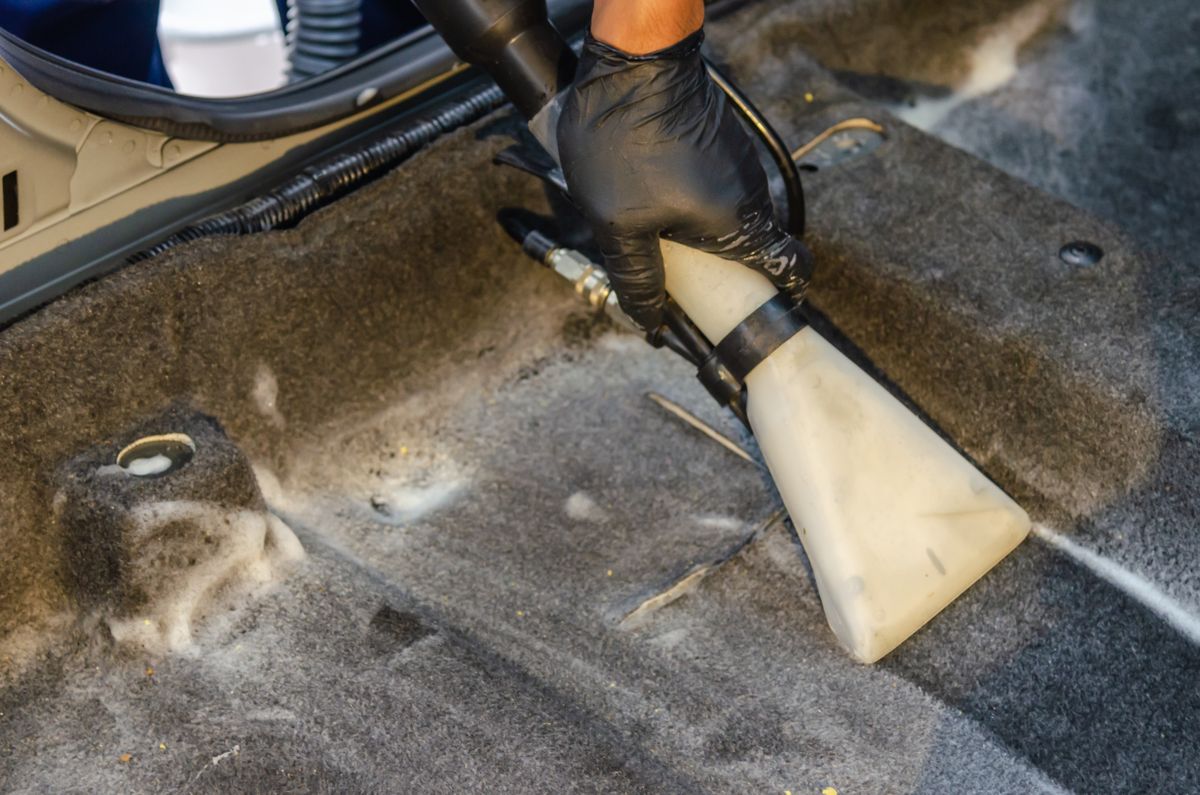
Photo by Khunkorn Laowisit on Pexels
| Cleaning Scenario / Debris Type | Required Suction (Pa) | Motor Effort (RPM) | Detailing Effectiveness |
| --- | --- | --- | --- |
| Surface Dashboard & Vent Dusting | 3,000 – 5,000 Pa | 15,000 – 20,000 RPM | Lifts loose surface dust; safe for delicate trims and touchscreens when paired with soft brush. |
| Loose Seat Crumbs & Dry Food | 6,000 – 9,000 Pa | 25,000 – 30,000 RPM | Clears top-layer food particles and ash from smooth leather and vinyl crevices. |
| Embedded Pet Hair & Fine Sand | 10,000 – 14,000 Pa | 35,000 – 40,000 RPM | Pulls short dog fur from woven fabric seats when agitated with a brush nozzle. |
| Heavy Floor Mat Gravel & Wet Road Sand | 15,000 – 19,000+ Pa | 50,000 RPM | Overcomes dense carpet weave friction to extract heavy road grit, small rocks, and deep dander. |
This comparative benchmark maps vacuum pressure ranges directly against real-world automotive cleaning scenarios:
Common Misconceptions About Vacuum Suction Ratings
Avoid these critical mistakes when shopping for or operating high-pressure portable car vacuums:
Frequently Asked Questions
Answers to technical questions regarding vacuum suction pressure, attachment safety, and runtime optimization.
Featured High-Performance Portable Vacuum
Upgrade your car detailing setup with our top-rated lightweight cleaning system:
Next Steps & Buying Guidance
Your decision: Select the Belibuy 6-in-1 Handheld Cordless Vacuum to get professional-grade 19,000Pa suction power in a portable 0.81 lb package.
Do this next: Visit portablecarvacuum.com to order your 6-in-1 Handheld Cordless Vacuum and enjoy hassle-free vehicle detailing.
- Read next: Car Vacuum Suction Power Buying Guide: How Many Pascals Do You Actually Need?
- Read next: Why Is Your Portable Vacuum Losing Suction Power? Causes and Quick Fixes
Belibuy 6-in-1 Portable Vacuum (19,000Pa / 50,000 RPM).
Take control of your car, home, and office cleaning routine today.